
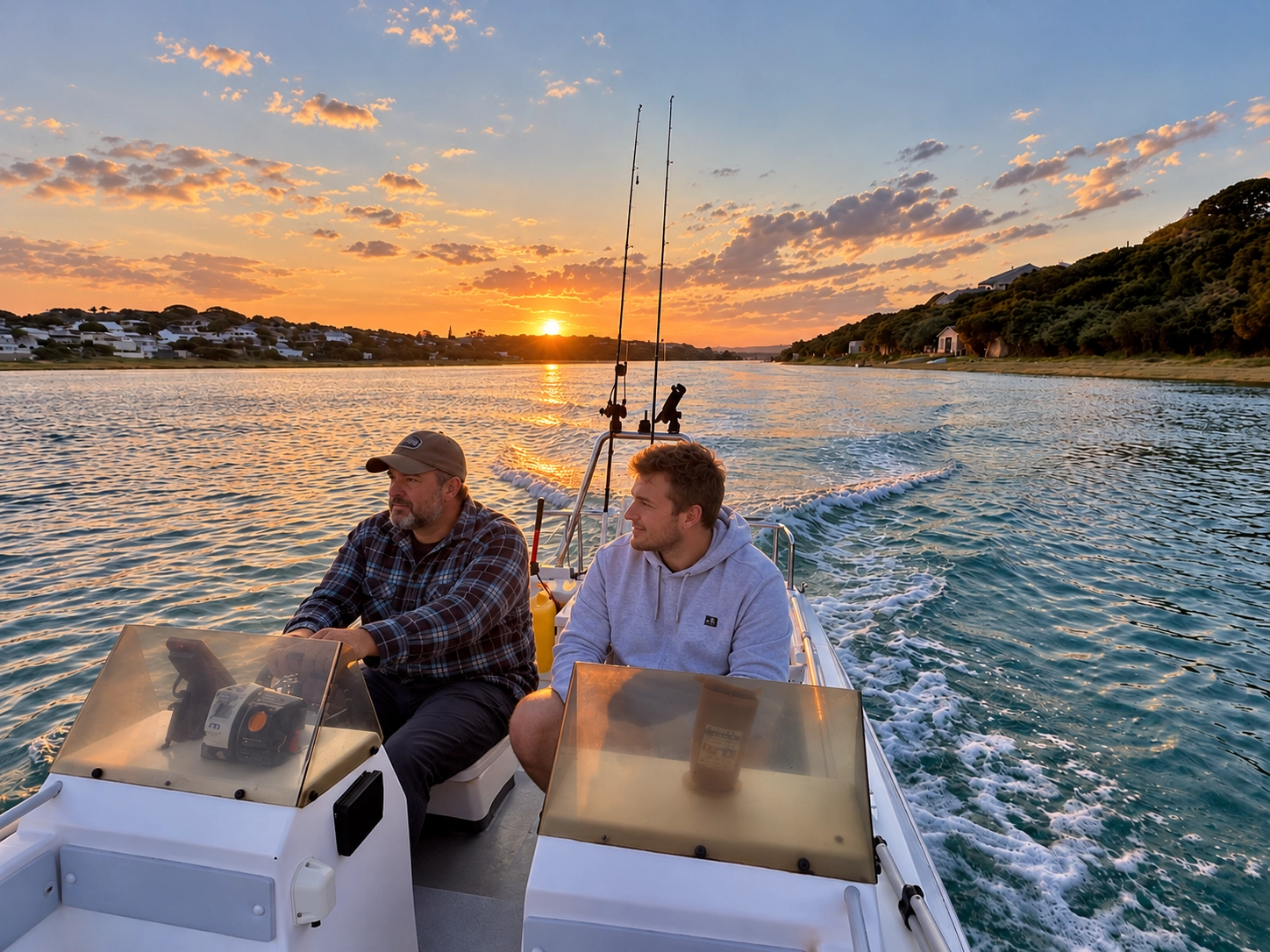
Things you need to know and adhere to….
Boat Regulations:
There are laws that govern the use of boats in the Ndlambe area.
- Any craft (power driven or sail) over 4 meters long must be registered with the Ndlambe Municipality.
- Prior to registration all craft must have a COF (certificate of fitness) issued by SASAA (South African Deep Sea Angling Association). There is a representative in Kenton-on-Sea at the Diaz Deep Sea Club in Milford Road, off Somerset or Kariega Road, Kenton (Bruce Thompson 082 809 4303).
- An annual boat license (sticker) is required. The fee is based on the boat and engine size. These are issued at the Municipal Office in Kenton on Sea or are available from Bruce Thompson at the Diaz Deep Sea Club (082 809 4303).
- A Skippers license is required for the operation of any boat with an engine capacity of over 15hp. To book your skippers training contact Keryn at info@skipperscourse.co.za or 082 692 67189
- Jet powered craft are not allowed on the Estuary.
- An owner has responsibility to ensure their boat is securely stored when not in use.
Boat Mooring:
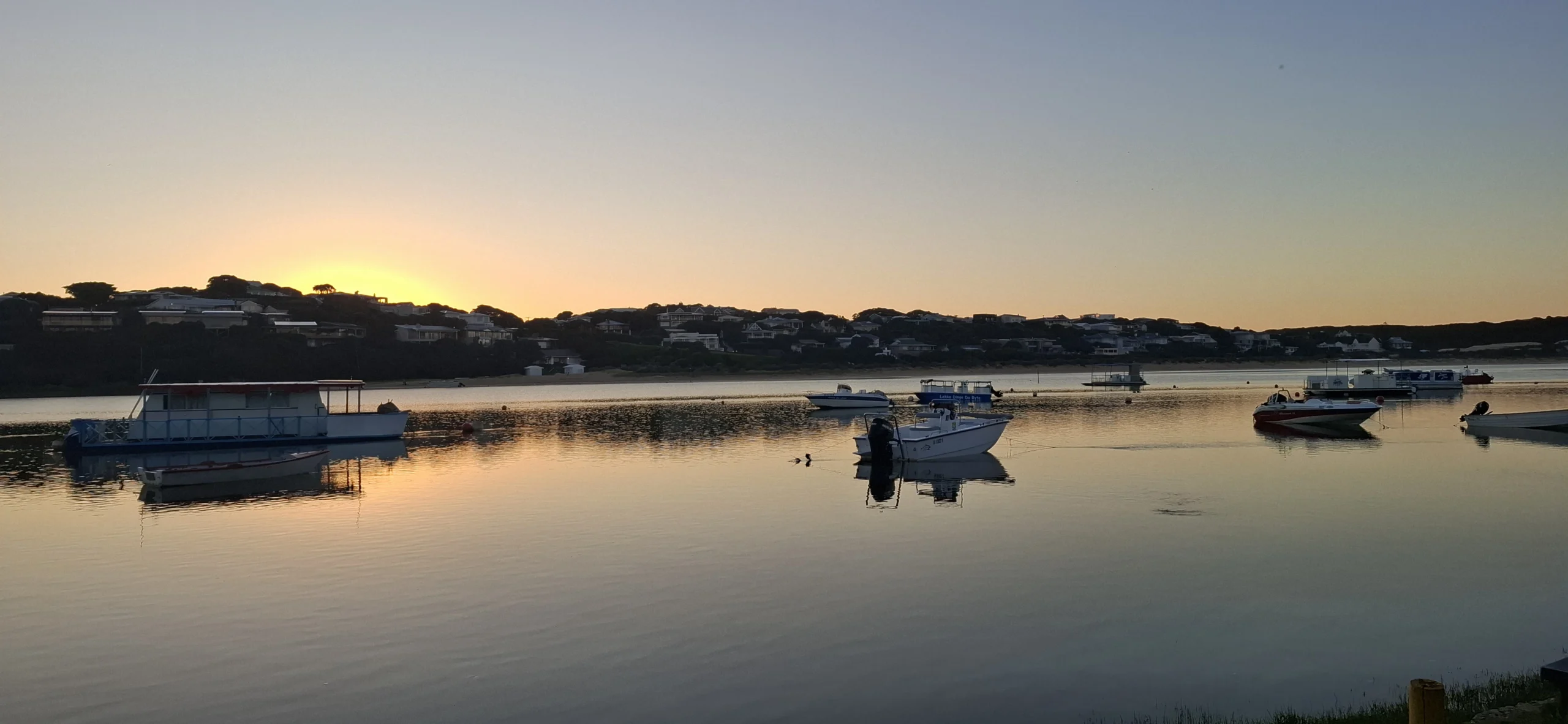
There are a limited number of authorized mooring spots (buoys) available on the Bushman’s River allocated by the Ndlambe Municipality and one has to pay the Municipality an annual fee for use of one of these if you get one. Please do not buy, rent or insert an unauthorized buoy. There are no authorized mooring spots available on the Kariega River. Every individual case has to be motivated to the Municipality. It is illegal to place a mooring without authorization and it will be removed. There is currently a proposal that all moorings become the responsibility of Eastern Cape Department of Economic Development, Environmental Affairs and Tourism, so the rules around moorings could change.
Usage Zones:
There are 4 usage zones on the both the Bushman’s and Kariega Estuaries. Signs mark the start and end of the zones but they are roughly as follows:
1
Zone 1 runs from the sea to the road bridge. Primary usage is for swimming, non- power boat activity and fishing. Power boats must travel at dead slow speed and no wake should be generated.
2
Zone 2 is from the bridge upriver to where the ski zone starts. Primary use is for fishing and boating. No skiing is allowed in this zone and boats should travel at moderate speed.
3
Zone 3 is the demarcated skiing area. Power boats and skiers have priority. Other users can travel through this zone but should stay clear to give the skiers space to operate.
4
Zone 4 is upstream of the ski zone and the same rules as Zone 2 apply.
Please respect the guests of the game lodges located along the river and go past slowly and do not make use of the private jetties.
Please also remove whatever you take upriver with you and do not light fires or leave trash on the farm or game farm properties.
The key to successful and amicable use of the estuaries is that all users adhere to the usage guidelines for each zone. It is equally unacceptable for a large powerboat to roar through a limitation zone and swamp all and sundry as it is for a fisherman to park his boat in the middle of the ski zone.
Definitions :
- Port = the left side of a vessel when facing forward toward the bow/front.
- Starboard = the right side when facing the bow/front
These terms are fixed to the vessel itself, not to the observer’s position, ensuring clear communication regardless of crew orientation
Rules of travel:
- The general rule of travel is keep right while under way.
- Power boats must give way to sailing and manually operated craft.
- When two boats approach each other, both should alter course to the right so they pass with their port sides facing each other.
- A boat catching and passing another should do so on the port (left) side of the boat in order to allow the front boat to keep right.
- Boats following a boat towing a skier should keep at least 100 meters clear of the skiing boat.
- The skipper of a power boat must be older than 16 years and have a current skippers license if the motor is bigger than 15Hp.
- Boats operating between sunset and sunrise must do so with navigation lights
- The owner of a boat is responsible for ensuring it is operated in a safe manner.
- At all times boats should stay clear of people in the water.
- It is an offence to operate a boat under the influence of alcohol or drugs.
The channels are for passing through and one should not anchor a boat mid channel. If one has to stop then you should move to the side of the channel before doing so.
Authorities on the River:
There are various official bodies who have jurisdiction on the Estuaries.
- Ndlambe municipality has authority for boat registration, licencing, river safety and local regulations.
- Department of Forestry, Fisheries and the Environment (DFFE) is the national department responsible for these areas.
- Department of Economic Development, Environmental Affairs and Tourism (DEDEAT) is the provincial government department in the Eastern Cape, responsible for issuing environmental authorisations and monitoring compliance.
- The South African Maritime Authority (SAMSA) has authority over Skippers Certification.
- The South African Police for Law and Order.
You will be well advised to establish who you are dealing with if approached by an authority. An aggressive or obstructionist attitude can make your life very uncomfortable.
Skiing:
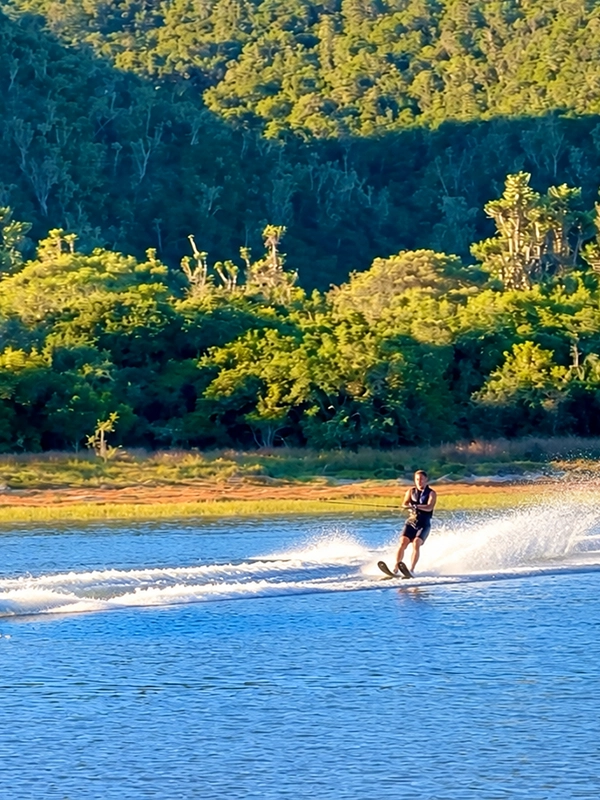
- Skiing is only allowed in demarcated zones.
- No skiing between sunset and sunrise.
- When towing a skier, the boat must travel in an anticlockwise direction. i.e. if going upriver, keep right, then do a left turn and keep right going back.
- No skiing is allowed within 10 metres of a stationary boat, jetty or swimmer.
- When a skier is in the water the towing boat must display a red flag (300 X 300mm).
- During busy times (Xmas and Easter) a second person who acts as a spotter must also be in the towing boat.
Fishing:
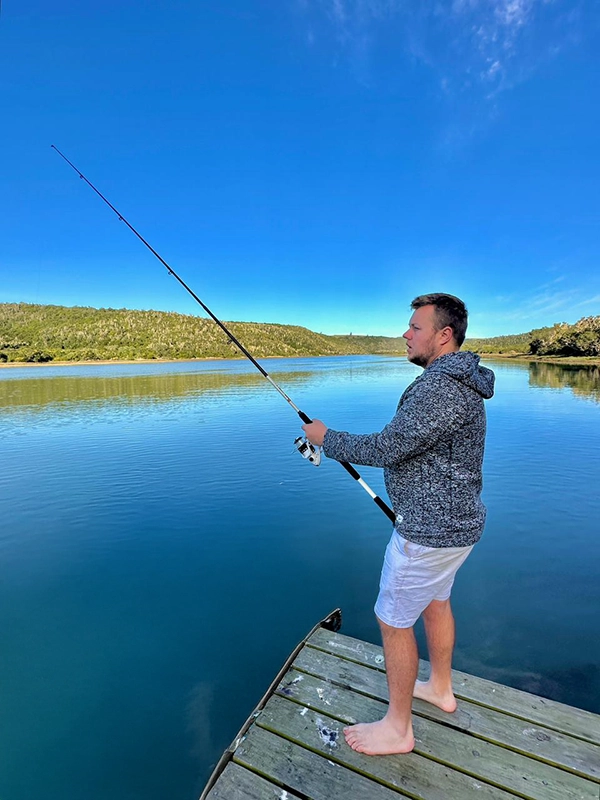
If you wish to collect bait or fish off a boat or along the banks you must have a specific fishing licence. Details of the various licences are available through the Department of Forestry Fisheries, and the Environment (DFFE) e-Fishing Platform fishing.dffe.gov.za where you can register and apply for an annual or monthly permit. Download a copy of the permit/license to your phone and carry a printed copy with you.

Slipway use:
When launching or taking a boat out of the water the following etiquette is appropriate
- Work quickly and efficiently when launching or taking your boat out.
- Usage should be in order of arrival at the slipway.
- Do not occupy the slipway while waiting for a car or people to arrive. The correct thing to do is wait out on the water and allow others to use the slipway until you are ready. Then board at the slipway or the nearby jetty.
- Vehicles and trailers should not be parked in a manner that interferes with efficient use of the slipway. There are demarcated areas for trailer parking that should be used.
Environmental responsibility:
- All estuary users have a responsibility to protect the natural environment – our clean, safe and wonderful estuaries, which flow through two big 5 game reserves are a unique asset that we all need to enjoy and protect.
- Avoid churning up the river beds in shallow water as these are breeding grounds for numerous animals and fish in the estuary.
- All refuse should be taken home for disposal.
- Do not sink bottles and cans in the river.
- Cigarette butts are lethal to fish – do not drop them in the water or leave them on the banks.
- If using the banks for a braai, please make use of a portable braai, placed below the high-water mark and do not make fires on the ground / sand or mud banks that can be a fire hazard and create litter. Please remove any fireplace remnants.
- We are the guests of property owners, farmers and game reserves that give us access to many of the estuary attractions, and we need to respect private property.


